Reducing Plastic Bottle Waste
Connect to the internet and reload this page to load jQuery.
Use Fewer Plastic Bottles
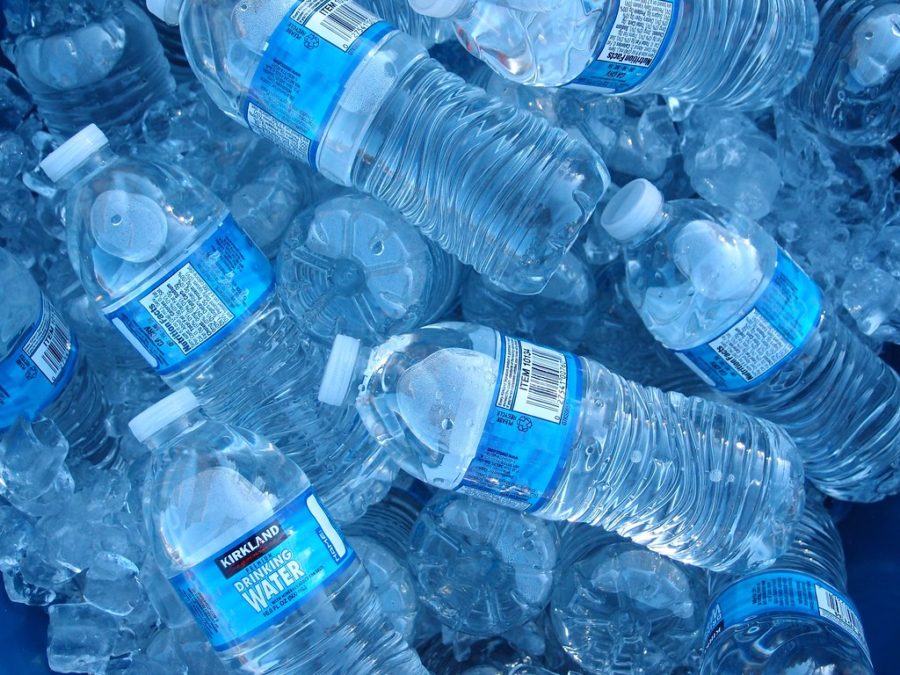
Using a refillable water bottle can reduce the number of single-use bottles you use.
This example follows a student who uses one disposable bottle on each of five school days per week.
Question: How many bottles could this student avoid by switching to a refillable bottle?
Slide 1 of 5
Small Habits Add Up

Assume the student uses 5 disposable bottles each week.
| Time period | Disposable bottles |
|---|---|
| 1 week | 5 |
| 4 weeks | 20 |
| 16-week semester | 80 |
5 bottles × 16 weeks = 80 bottles per semester.
Slide 2 of 5
Compare Two Routines
Assume every disposable bottle is replaced by a refill from a refillable bottle.
| Routine | Disposable bottles in 16 weeks |
|---|---|
| Disposable bottle every school day | 80 |
| Refillable bottle every school day | 0 |
In this example, switching avoids 80 disposable bottles in one semester.
Slide 3 of 5
What If 25 Students Switch?
If 25 students follow the same routine, the number of disposable bottles avoided becomes larger.
| Students switching | Bottles avoided per semester |
|---|---|
| 1 | 80 |
| 10 | 800 |
| 25 | 2,000 |
25 students × 80 bottles = 2,000 fewer disposable bottles.
Slide 4 of 5
Bring a Refillable Bottle
A small change in a daily routine can reduce single-use bottle consumption.
Bring a refillable bottle and refill it instead of buying a disposable bottle on school days.
Example result: One student avoids 80 disposable bottles over 16 weeks. A group of 25 avoids 2,000.
These are example calculations, not survey results. Assumptions: 5 school days per week, 16 weeks per semester, and one disposable bottle replaced each day. This counts disposable bottles avoided; it does not measure the full environmental impact of either bottle type.
Slide 5 of 5