Mental Health Data: Antidepressant Efficacy and Tolerability
A practical guide for people researching major depressive disorder: connect comparative effectiveness, real-world treatment outcomes, and official medication safety information to build better questions—not self-prescriptions.
Purpose
This page helps students, patients, caregivers, and health-information consumers locate credible antidepressant data, understand what each source can and cannot show, and combine findings into a careful evidence-based interpretation.
The Focus
Antidepressant efficacy, acceptability, and safety data for adults with major depressive disorder. “Efficacy” usually describes symptom improvement under study conditions. “Acceptability” is often measured by stopping treatment for any reason. Safety information adds contraindications, warnings, adverse reactions, and monitoring needs.
Why three kinds of evidence?
A ranking from a meta-analysis, an outcome from a real-world study, and a warning from a drug label answer different questions. Reading them together prevents one statistic from being treated as the whole story.
Resources
Each resource below includes the organization, the specific landing page, a genuine screenshot example, and a direct link to its source page.
1. Kyoto University

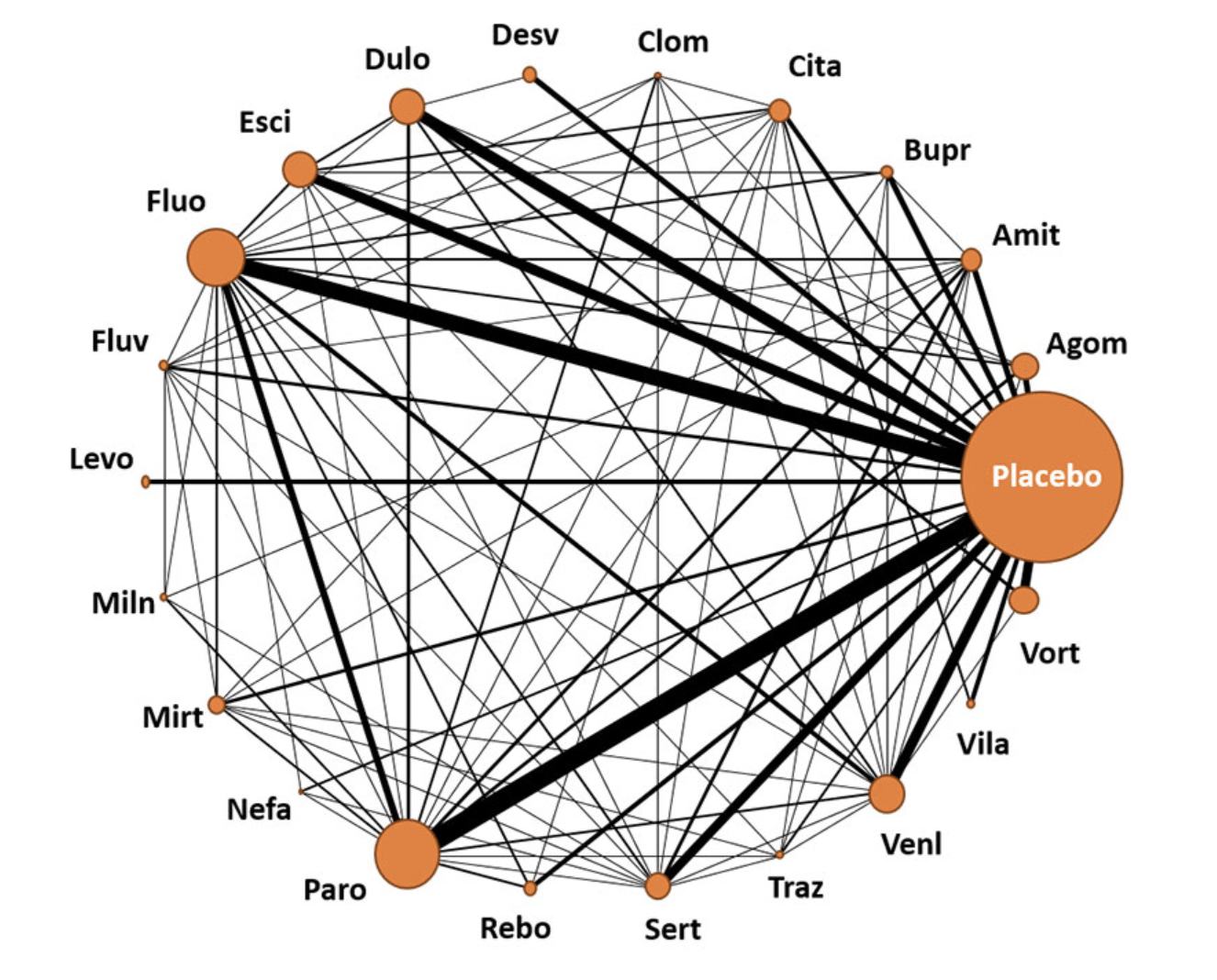
Figure 1. Network diagram of clinical trials comparing 21 antidepressants
and placebo. Larger circles represent more participants, while thicker
connecting lines represent more direct comparisons.
Kyoto University’s
antidepressant research page
2. NIH

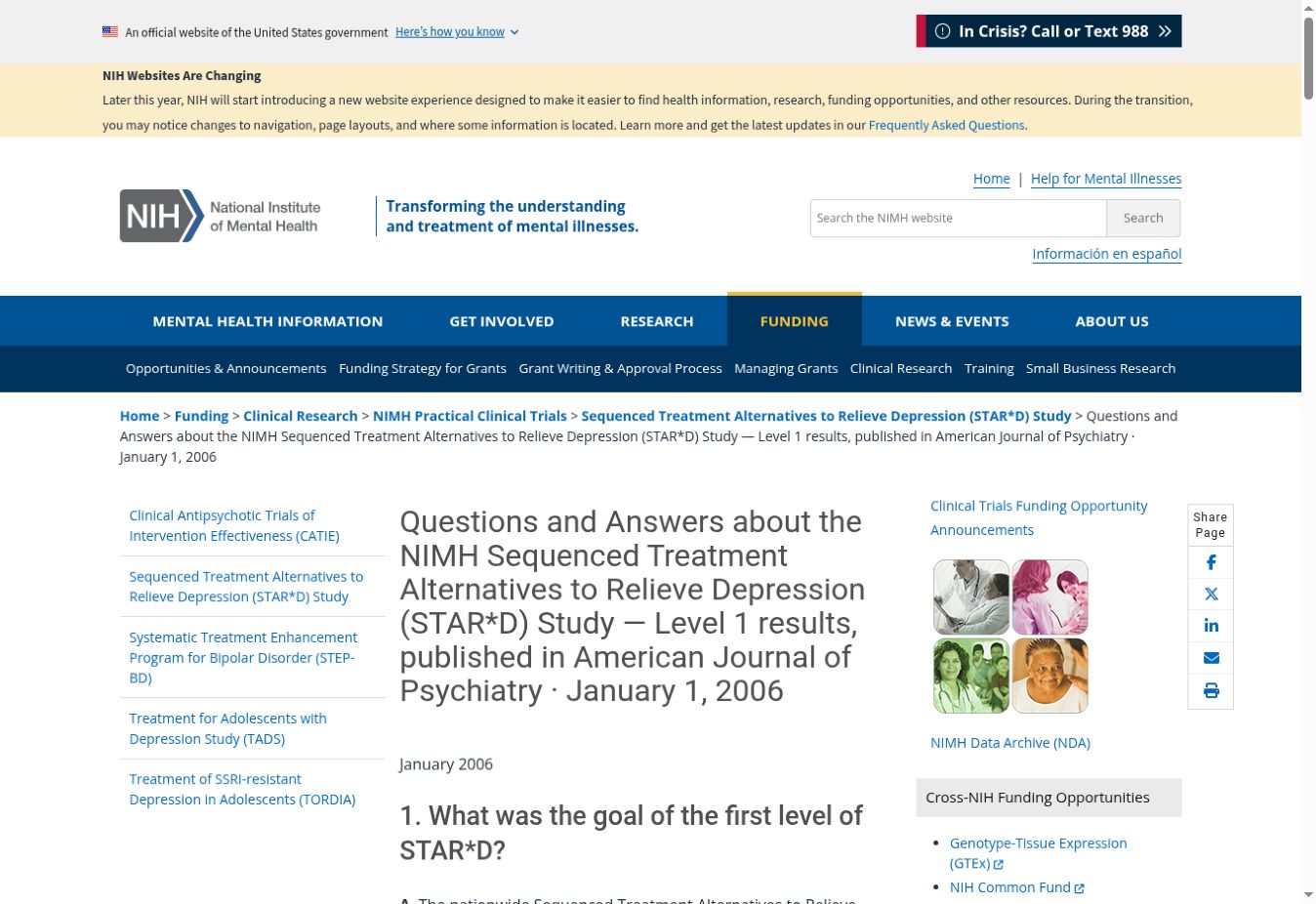
Figure 2. The NIMH STAR*D Level 1 results page, which explains real-world antidepressant treatment outcomes.
NIH’s
antidepressant research page
3. DAILYMED

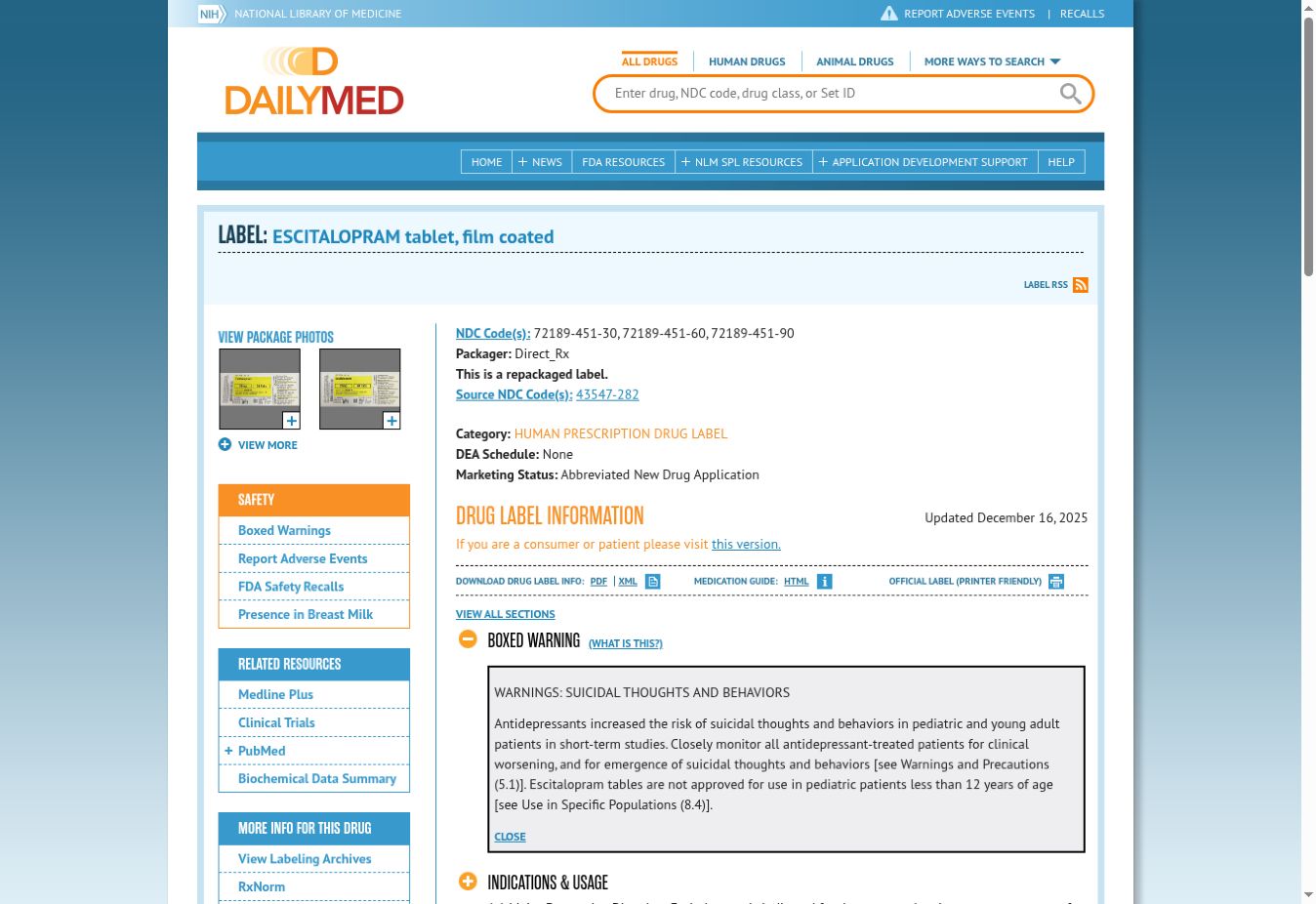
Figure 3. DailyMed’s official escitalopram label showing product information, safety sections, and the boxed warning.
DAILYMED’s
antidepressant research page
Consumer Goals
No single page identifies a universally “best” medication. The useful goal is to match the question to the right evidence, then compare limitations.
01
Compare benefits and continuation
Start with Kyoto’s synthesis to see whether a medicine showed relatively favorable symptom response and acceptability across randomized trials.
02
Test relevance to ordinary care
Use NIMH’s STAR*D material to ask how treatment performed in diverse outpatient settings and how long meaningful improvement took.
03
Prepare safety questions
Use DailyMed to identify warnings, contraindications, interaction concerns, and monitoring topics to discuss with a licensed clinician or pharmacist.
Insights
“What can these sources tell us about choosing and monitoring a first antidepressant treatment?”
1. Establish comparative evidence
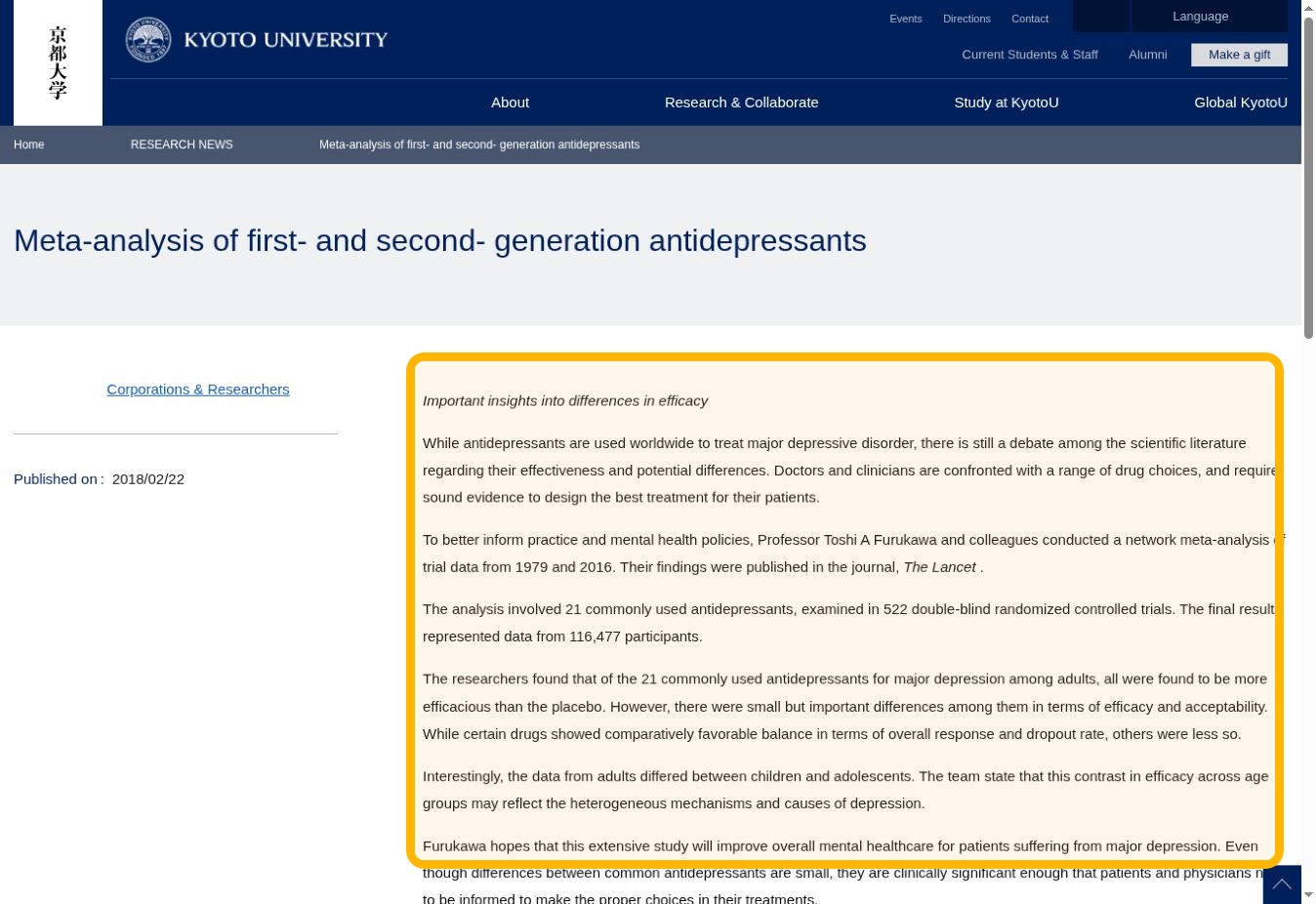
Figure 1. Kyoto University’s overview of research comparing the efficacy and acceptability of 21 antidepressants.
Read the population, treatment window, outcomes, and comparison method before looking for a winner. The Kyoto summary reports that all 21 antidepressants were more efficacious than placebo in adults, while meaningful differences existed in both efficacy and acceptability.
What to record: population = adults with acute major depression; evidence type = network meta-analysis; key outcomes = response and all-cause discontinuation.
2. Add real-world context
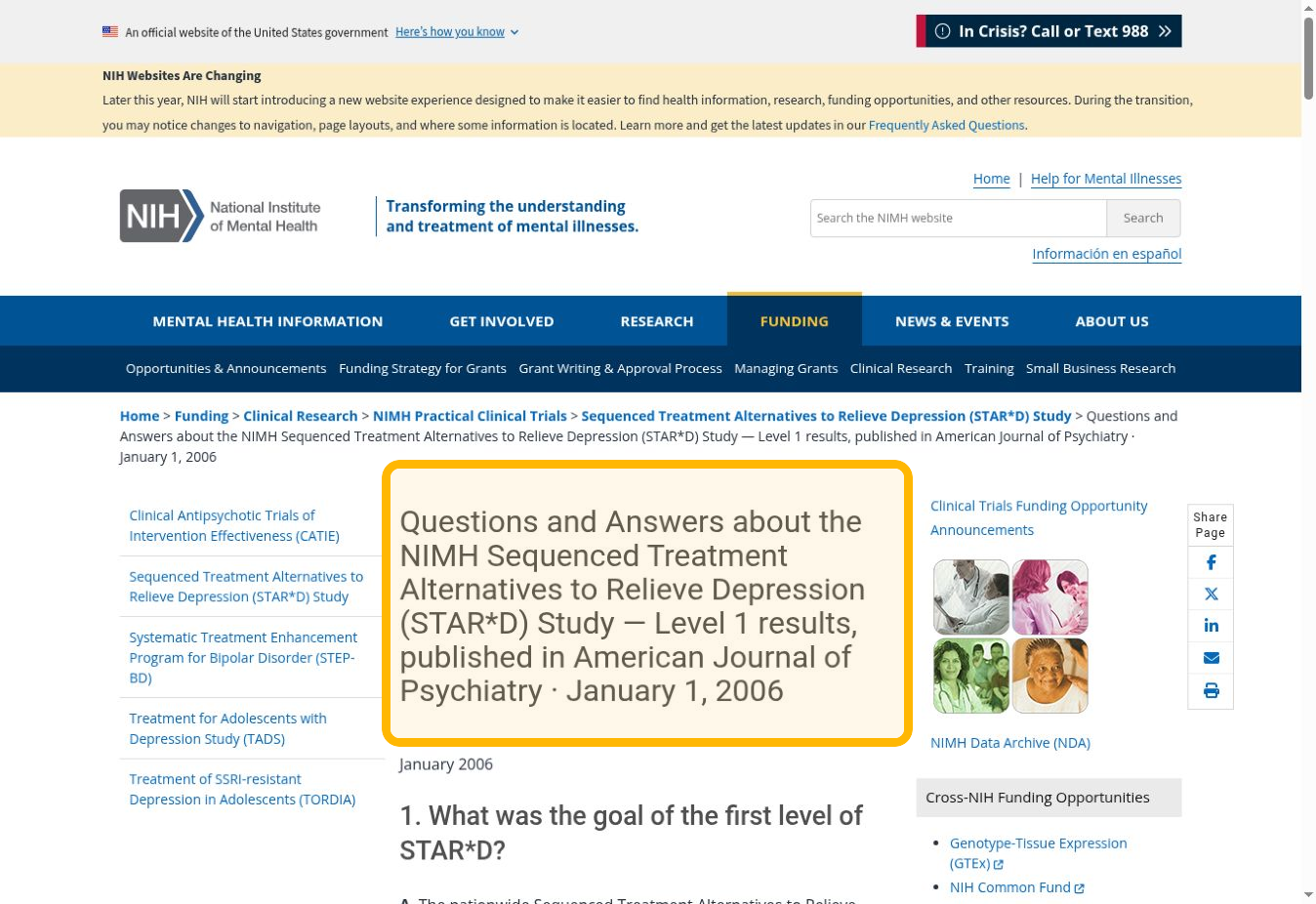
Figure 2. NIMH’s STAR*D study overview.
STAR*D Level 1 studied citalopram—not escitalopram—but both are SSRIs and the study illustrates the limits of first-step treatment in everyday care. NIMH reports that about one-third of evaluated participants reached remission, improvement often took several weeks, and symptom plus side-effect measurement guided care.
What to record: about one-third reached remission; average improvement took nearly six weeks and remission nearly seven; the source cautions that individual outcomes cannot be predicted from group results.
3. Check official safety information
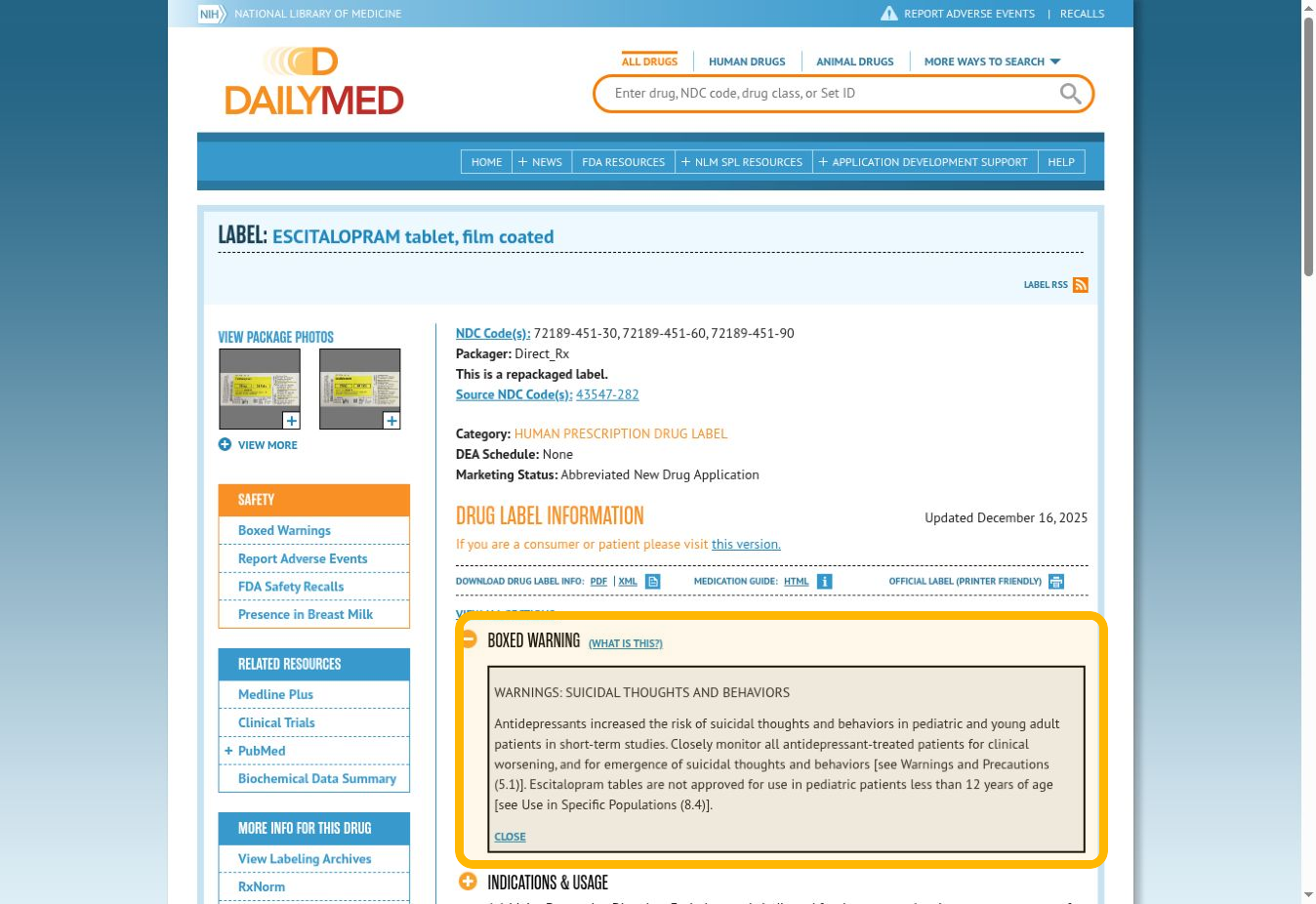
Figure 3. DailyMed’s overview of safety information for antidepressants.
Move from average outcomes to the actual product label. The DailyMed example identifies approved uses and presents a boxed warning concerning suicidal thoughts and behaviors in pediatric and young adult patients, along with monitoring language and other detailed precautions.
What to record: the label’s update date and packager; boxed warnings; contraindications; drug interactions; discontinuation guidance; and which sections apply to the person’s age and health history.
Synthesis
What can possibly be concluded from the evidence?
| Resource |
Evidence Provided |
Main Finding |
How It Helps |
| Kyoto University |
Network meta-analysis of 21 antidepressants |
All 21 antidepressants were more effective than placebo, but their efficacy and acceptability differed. |
Helps consumers compare average treatment response and discontinuation across medications. |
| NIH/NIMH STAR*D |
Real-world outpatient treatment study |
About one-third of evaluated participants reached remission during the first treatment level, and improvement often required several weeks. |
Shows that the first medication may not produce remission and that treatment should be monitored over time. |
| DailyMed |
Official medication label and safety information |
Escitalopram has warnings, contraindications, possible interactions, and age-related monitoring considerations. |
Helps consumers prepare safety questions for a doctor or pharmacist. |
| Combined Conclusion |
Antidepressants can improve depression symptoms, but research does not identify one medication as the best choice for every person. Comparative efficacy, real-world outcomes, individual safety risks, side effects, and ongoing monitoring must all be considered with a licensed healthcare professional.
|
This chart synthesizes comparative research, real-world treatment outcomes, and official medication safety information. It is intended for research and education, not personal medical advice.